Whether you’re opening a new business, rebranding your storefront, or upgrading outdated signage, one of the first questions you’ll ask is:
How much does business signage cost in Mississauga?
The answer depends on several factors, including the type of sign, materials, size, lighting, installation requirements, and local permit regulations.
Today, we’ll break down the average costs of commercial signs in Mississauga, explain what affects pricing, and help you choose the best signage for your budget.
Why Quality Business Signage Is Worth the Investment
Your business sign is more than just your company name it’s one of your most valuable marketing assets. Professional signage helps you:
- Increase brand visibility
- Attract foot traffic
- Improve customer trust
- Stand out from competitors
- Reinforce your brand identity 24/7
For many local businesses, a well-designed sign pays for itself by bringing in new customers every day.
Average Business Signage Costs in Mississauga
Below are estimated price ranges for common types of commercial signage.
| Sign Type | Average Price |
| Vinyl Window Graphics | $250-$1,200 |
| Acrylic Office Signs | $300-$1,500 |
| Reception Signs | $500-$2,500 |
| Channel Letter Signs | $2,500-$10,000+ |
| Cabinet Signs | $2,000-$8,000 |
| Monument Signs | $5,000-$20,000+ |
| Pylon Signs | $10,000-$50,000+ |
| LED Digital Signs | $8,000-$40,000+ |
| Vehicle Wraps | $2,500-$6,000 |
Prices vary based on customization, materials, installation complexity, and municipal requirements.
Some Factors That Affect Business Signage Costs
The cost of business signage in Canada depends on several factors, including the type of sign, size, materials, lighting, installation requirements, and local regulations. Below are the key factors that influence signage pricing.
1. Type of Sign
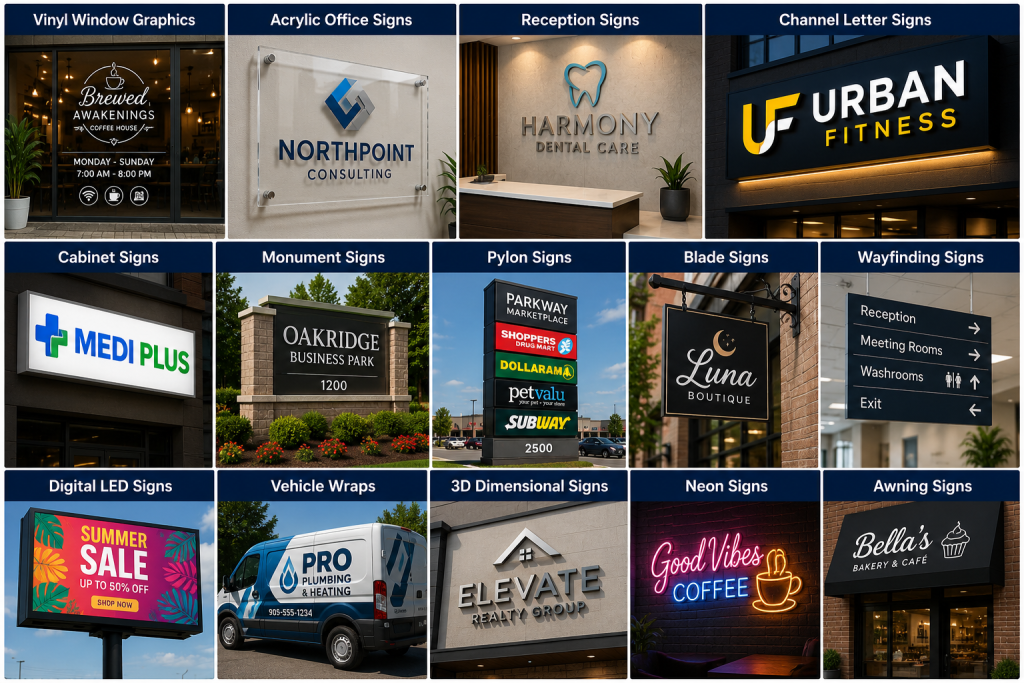
Different types of signs require different materials, manufacturing methods, and installation processes, which directly impact the overall cost.
Common types of business signs include:
- Window Decals – Ideal for retail stores, cafés, salons, and offices.
- Real example: A café in Downtown Toronto displaying store hours and promotional offers.
- Cost: Low
- Vinyl Banners – Suitable for grand openings, seasonal sales, and events.
- Real example: Grand opening banner outside a retail store in Mississauga.
- Cost: Low
- Channel Letter Signs – Individual illuminated or non-illuminated letters mounted on storefronts.
- Real examples: Starbucks, Tim Hortons, RBC, Scotiabank.
- Cost: Medium to High
- Cabinet (Box) Signs – Illuminated rectangular signs commonly used by franchises and convenience stores.
- Real examples: Circle K, pharmacies, local restaurants.
- Cost: Medium
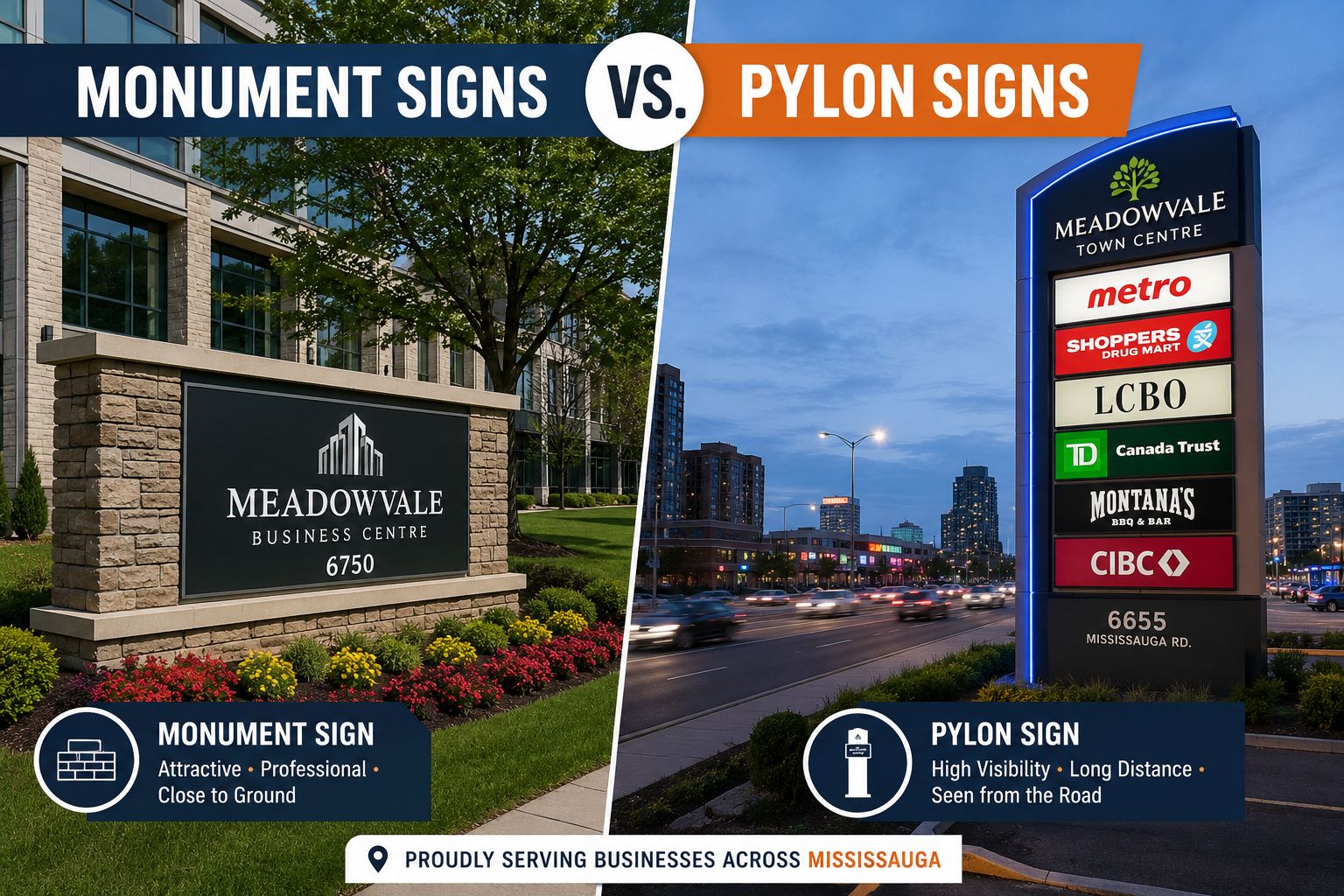
- Monument Signs – Ground-level signs installed at entrances of business parks and commercial properties.
- Real examples: Hotels, schools, hospitals, office parks.
- Cost: High
- Pylon Signs – Tall freestanding signs designed for maximum roadside visibility.
- Real examples: Canadian Tire, Petro-Canada, shopping plazas.
- Cost: High
- Blade Signs – Signs mounted perpendicular to a building, commonly used in pedestrian shopping districts.
- Real example: Boutique stores in Kensington Market (Toronto) and Old Montréal.
- Cost: Medium
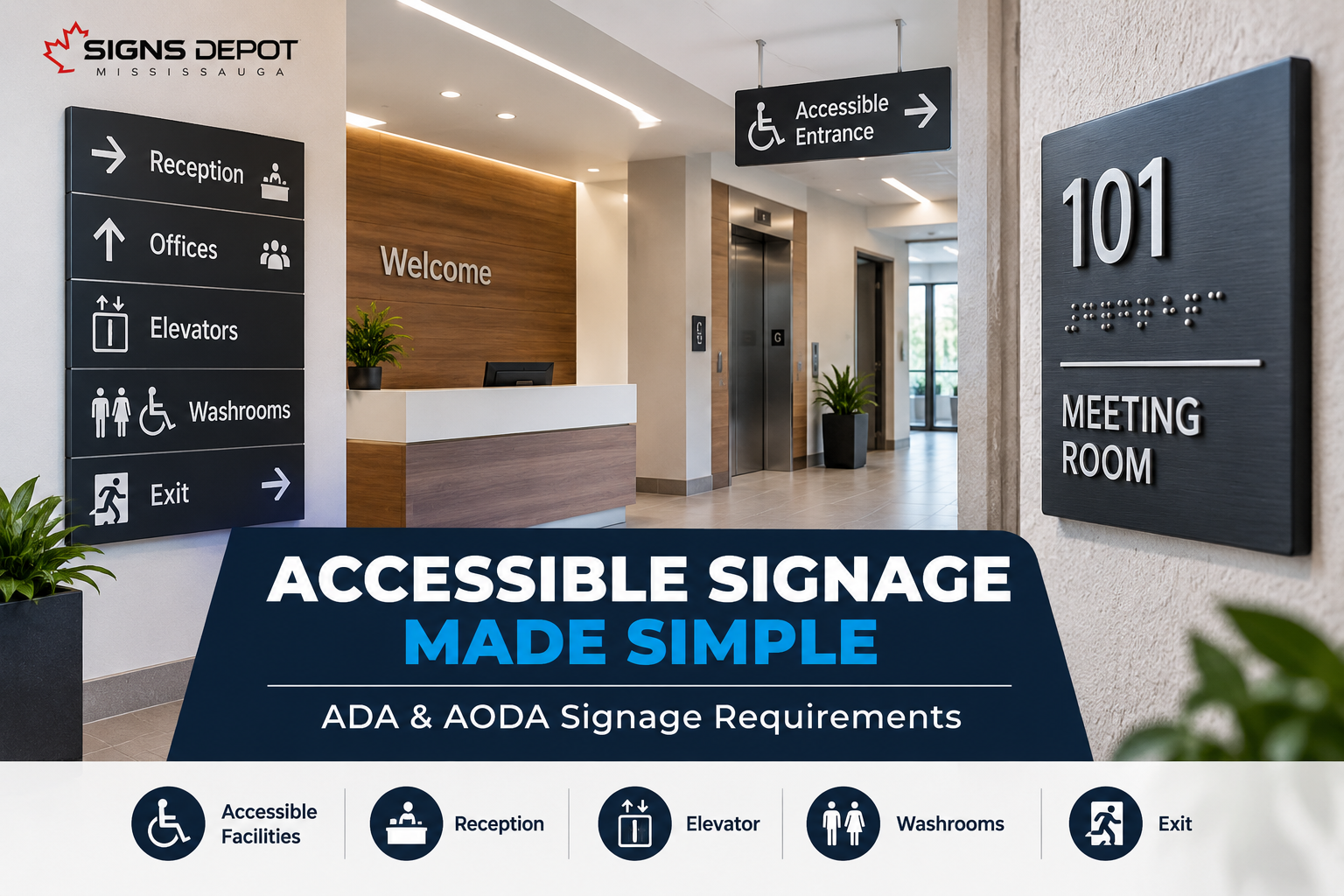
- Wayfinding Signs – Directional signage for campuses and commercial complexes.
- Real examples: Hospitals, universities, shopping malls.
- Cost: Medium
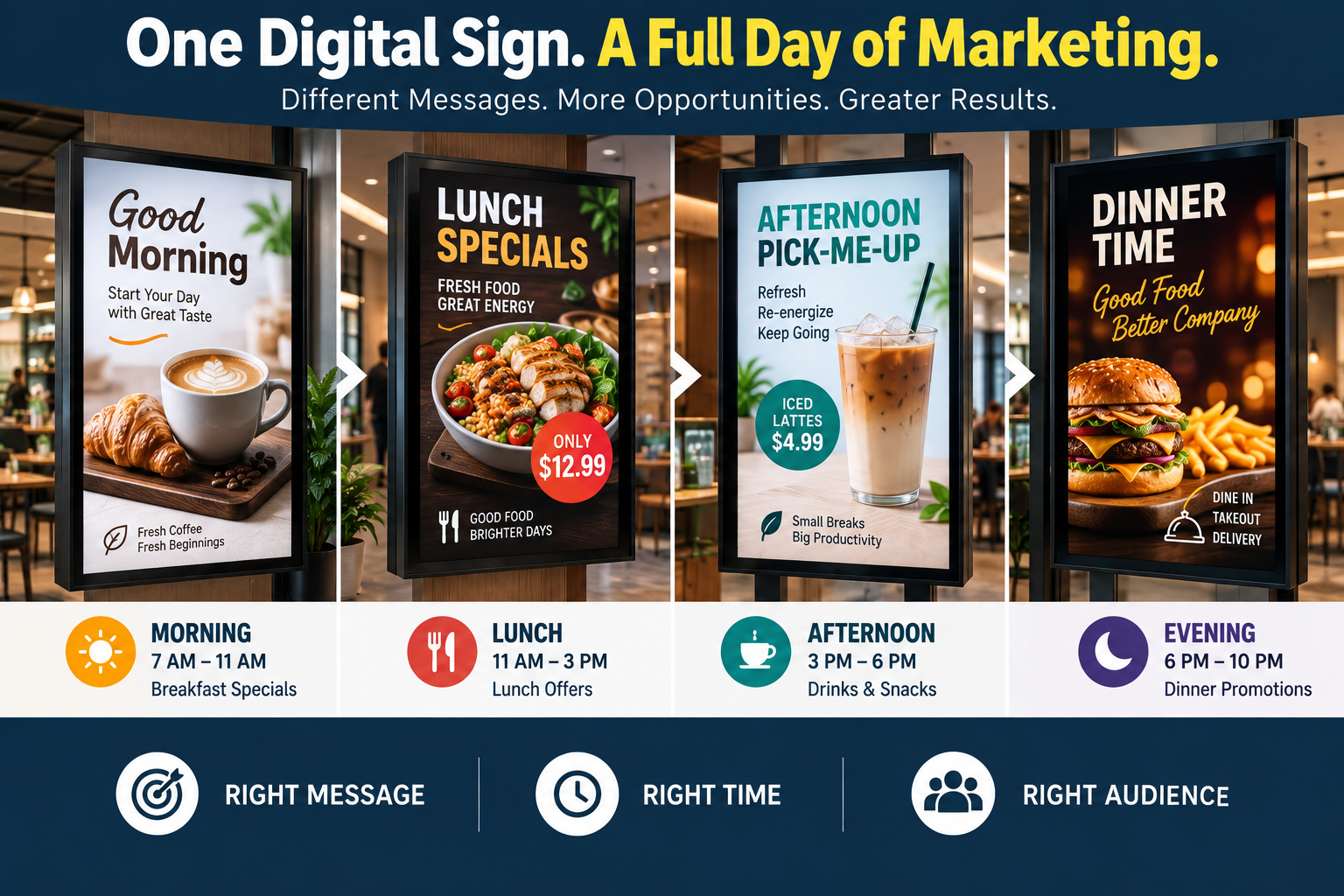
- Digital LED Signs – Electronic displays for advertisements and announcements.
- Real examples: Car dealerships, churches, restaurants, schools.
- Cost: Very High
2. Sign Size
The size of a sign significantly affects the total cost because larger signs require more materials, fabrication time, transportation, and installation equipment.
Common sign sizes include:
- Small Signs (2–10 sq. ft.)
- Best for cafés, salons, clinics, and small retail stores.
- Real example: A 4′ × 2′ aluminum storefront sign for a beauty salon in Ottawa.
- Requires minimal installation equipment.
- Lower overall cost.
- Medium Signs (10–40 sq. ft.)
- Common for restaurants, medical clinics, and franchise outlets.
- Real example: An 8′ × 3′ illuminated channel letter sign for Subway or Pizza Pizza in Mississauga.
- Requires additional fabrication and installation.
- Moderate cost.
- Large Signs (40–100+ sq. ft.)
- Used for shopping centres, warehouses, hotels, and corporate offices.
- Real example: Large illuminated signage on a Costco warehouse in Calgary.
- May require cranes and structural support.
- Higher cost.
- Extra-Large Signs
- Installed on high-rise buildings, stadiums, airports, and major commercial properties.
- Real examples: Corporate building signage in Downtown Toronto or Vancouver’s Financial District.
- Requires engineering approvals and specialized installation.
- Highest cost.
3. Material Selection
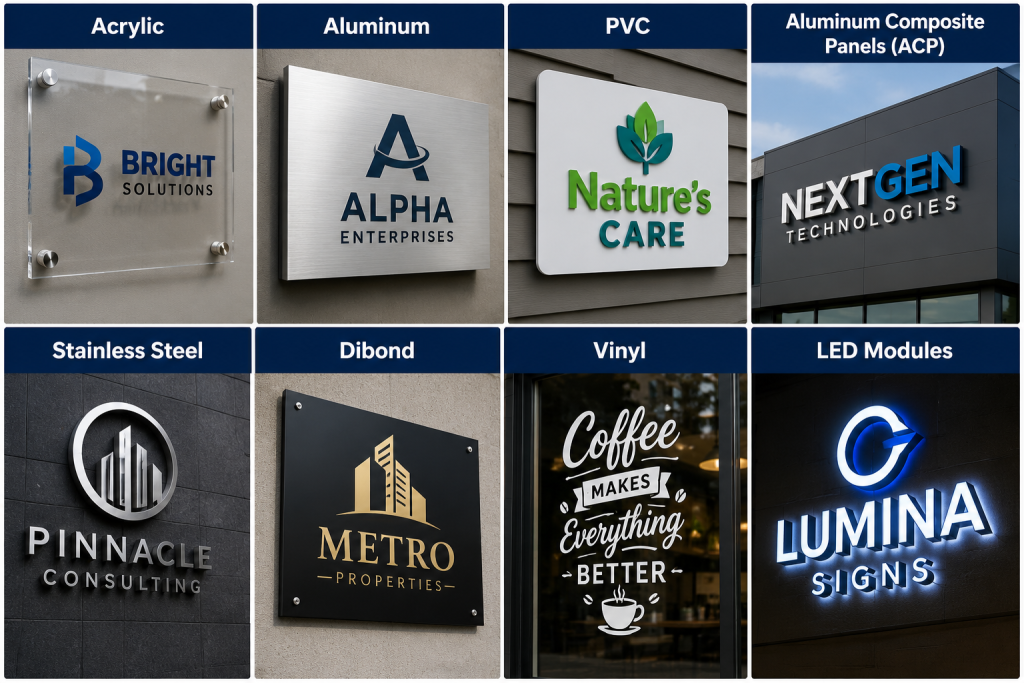
The materials used for your sign impact durability, appearance, maintenance, and overall price.
Common signage materials include:
- Acrylic
- Aluminum
- PVC
- Aluminum Composite Panels (ACP)
- Stainless Steel
- Dibond
- Vinyl
- LED Modules
Examples:
- PVC – Affordable option for temporary indoor signs.
- Vinyl – Common for window graphics and promotional banners.
- Aluminum – Lightweight and weather-resistant for storefront signs.
- ACP (Aluminum Composite Panels) – Widely used for durable outdoor business signage.
- Stainless Steel – Premium finish for corporate offices, hotels, and luxury retail stores.
- Acrylic – Popular for illuminated channel letters and reception signs.
Premium materials generally provide better resistance to Canada’s snow, rain, UV exposure, and changing temperatures.
4. Lighting Options
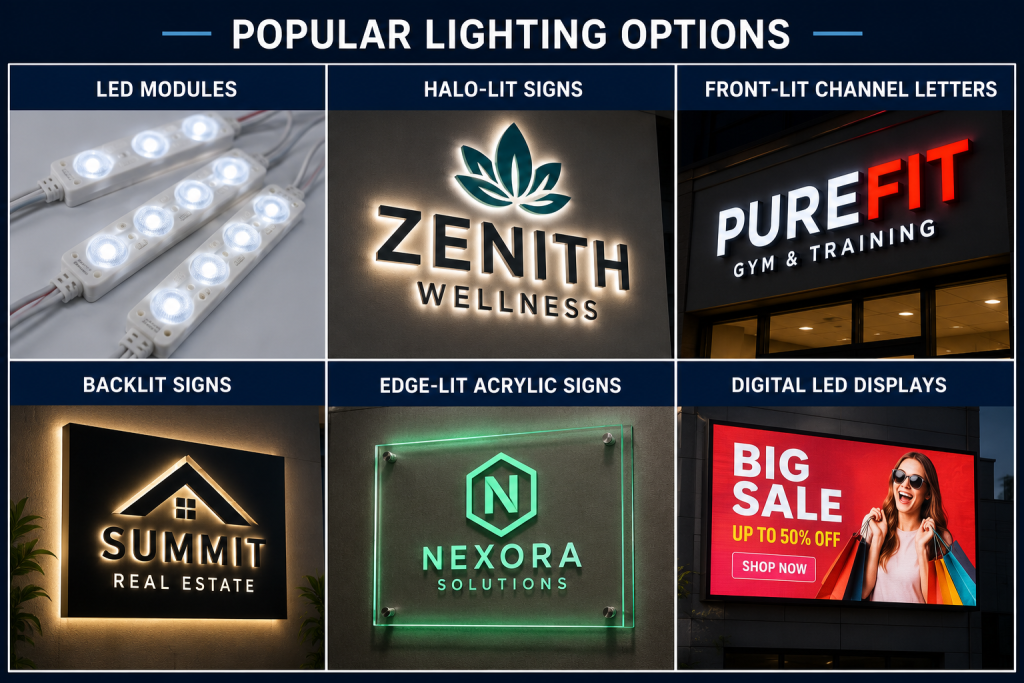
Illuminated signage improves visibility during evenings, winter months, and poor weather conditions.
Popular lighting options include:
- LED Modules
- Halo-Lit Signs
- Front-Lit Channel Letters
- Backlit Signs
- Edge-Lit Acrylic Signs
- Digital LED Displays
Real examples:
- McDonald’s uses illuminated channel letters.
- Tim Hortons stores feature LED-lit storefront signage.
- Hotels in Niagara Falls use backlit signs for nighttime visibility.
- Car dealerships in Edmonton install LED pylon signs visible from highways.
Although illuminated signs have a higher upfront cost, they often deliver better visibility and long-term return on investment.
5. Installation Costs
Professional installation costs vary based on the complexity of the project and site conditions.
Installation may include:
- Site inspection
- Electrical work
- Crane or boom lift rental
- Structural mounting
- Concrete foundations
- Safety compliance
- Traffic management (if required)
Real examples:
- Installing window decals for a retail store in London, Ontario is quick and cost-effective.
- Mounting illuminated channel letters on a multi-storey office building in Downtown Toronto requires cranes, certified electricians, and additional labour.
- Installing a monument sign at a business park in Vaughan involves excavation, concrete work, and engineering.
6. Permits and Local Regulations
Many Canadian municipalities require permits before commercial signage can be installed.
Permit requirements often depend on:
- Sign size
- Sign height
- Type of sign
- Illumination
- Building location
- Heritage districts
- Zoning bylaws
Examples across Canada:
- Toronto: Regulations for illuminated signs, digital displays, and heritage districts.
- Vancouver: Rules governing sign dimensions, projections, and lighting.
- Calgary: Development permits often required for pylon, monument, and illuminated signs.
- Mississauga: Municipal sign bylaws for commercial storefronts and plazas.
- Brampton: Permit requirements for freestanding and illuminated business signs.
- Ottawa: Specific regulations for signs in commercial and heritage areas.
Working with an experienced sign company can simplify the permit process and help ensure your signage complies with local regulations, reducing the risk of delays or additional costs.
Business Signage Cost by Industry
Different businesses have different signage requirements.
Restaurants
Typical signage includes:
- Channel letters
- Window graphics
- Menu boards
- Blade signs
Average investment:
$3,000-$15,000
Retail Stores
Most retailers invest in:
- Storefront signs
- Promotional window graphics
- Indoor branding
- Directional signage
Average investment:
$2,500-$12,000
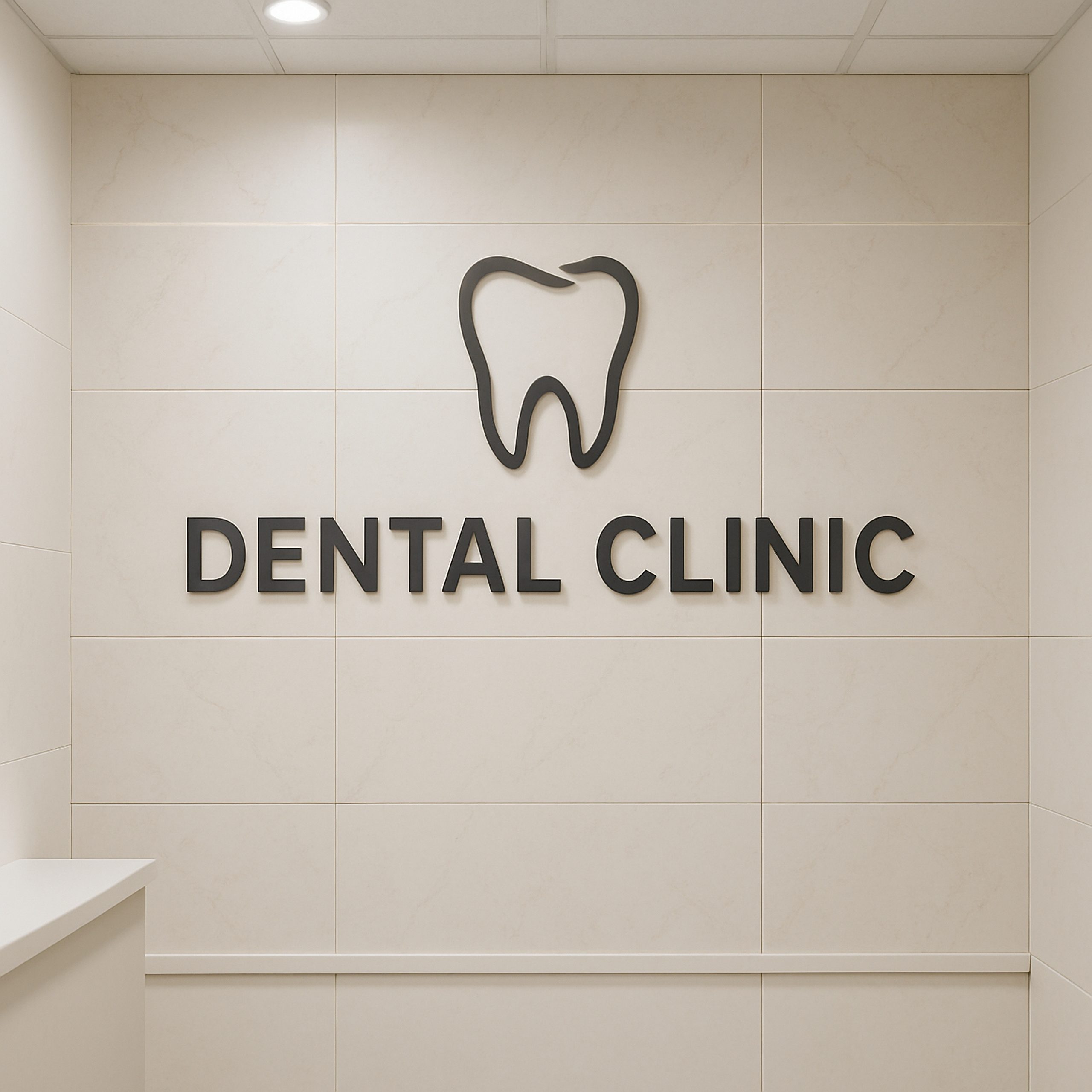
Medical Clinics
Common signage includes:
- Reception signs
- Wayfinding signs
- ADA-compliant signage
- Exterior identification signs
Average investment:
$2,000-$10,000
Corporate Offices
Office signage often includes:
- Lobby signs
- Conference room signs
- Frosted vinyl graphics
- Directional signage
Average investment:
$1,500-$8,000
How to Reduce Your Business Signage Costs
You don’t always need the most expensive option to make a strong impression.
Here are some ways to maximize value:
- Choose durable materials that reduce maintenance.
- Bundle multiple signs into one project.
- Invest in LED lighting for long-term energy savings.
- Work with an experienced local sign company.
- Plan for future branding needs to avoid frequent replacements.
Why Choose a Local Mississauga Sign Company?
Working with a local provider offers several advantages:
- Faster site visits
- Knowledge of municipal regulations
- Quicker installation timelines
- Personalized design consultations
- Ongoing maintenance and support
Local expertise can simplify the process and help avoid costly delays.
Frequently Asked Questions
How much does a storefront sign cost in Mississauga?
Most storefront signs range from $2,500 to $10,000, depending on size, materials, lighting, and installation.
Are LED signs worth the investment?
Yes. LED signs are energy-efficient, highly visible, and can improve brand exposure, making them a valuable long-term investment.
How long does business signage last?
With proper maintenance, quality commercial signs can last 7-15 years or more, depending on the materials and environmental conditions.
Do I need a permit for business signage in Mississauga?
Some sign types require municipal approval. It’s best to consult with a professional sign company that can guide you through the permitting process.
What is the most affordable business sign?
Vinyl window graphics and acrylic signs are generally among the most budget-friendly options for businesses.
Final Thoughts
Business signage is one of the most effective long-term marketing investments for any company. Whether you need a simple office sign or a fully illuminated storefront display, choosing the right signage can enhance visibility, strengthen your brand, and attract more customers.
The cost of business signage in Mississauga depends on factors such as sign type, materials, size, lighting, and installation. By partnering with an experienced local sign company, you can find a solution that fits your budget while delivering lasting value.