An awning can do more than provide shade or shelter outside your business. When designed thoughtfully, it can become an important part of your storefront’s identity, helping customers recognize your brand while giving your entrance a more finished appearance.
For retail stores, cafés, restaurants, salons, and other commercial spaces in Mississauga, choosing the right awning sign involves more than selecting an attractive colour. You also need to consider materials, lettering, building design, weather exposure, and long-term maintenance.
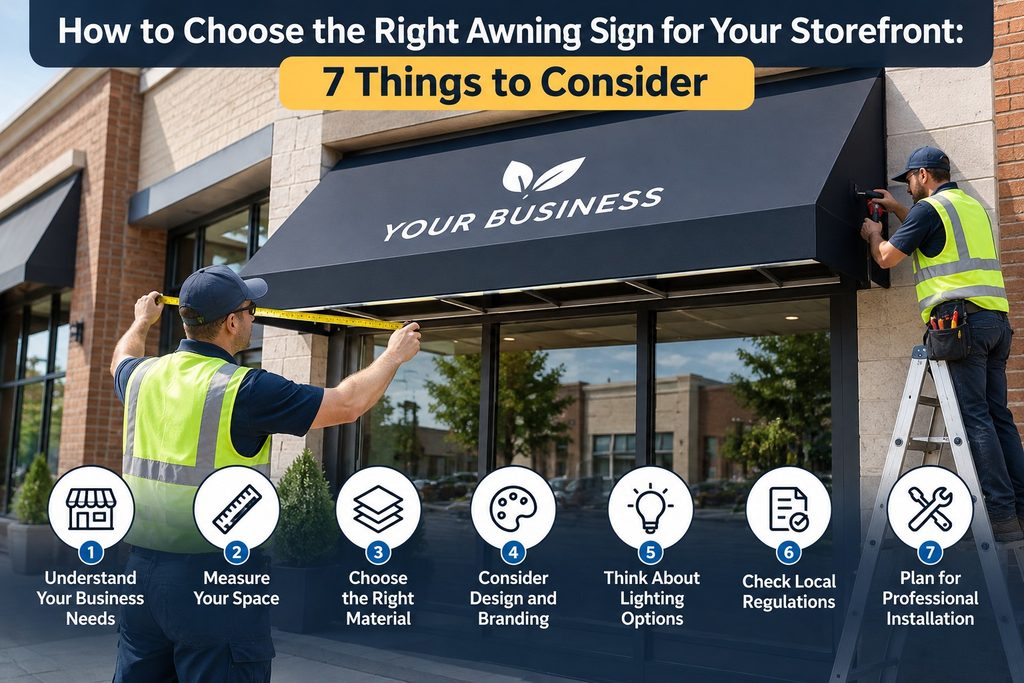
If you are planning a new storefront or upgrading an existing one, here are seven important factors to consider before investing in custom awning signs.
1. Choose an Awning Style That Suits Your Business
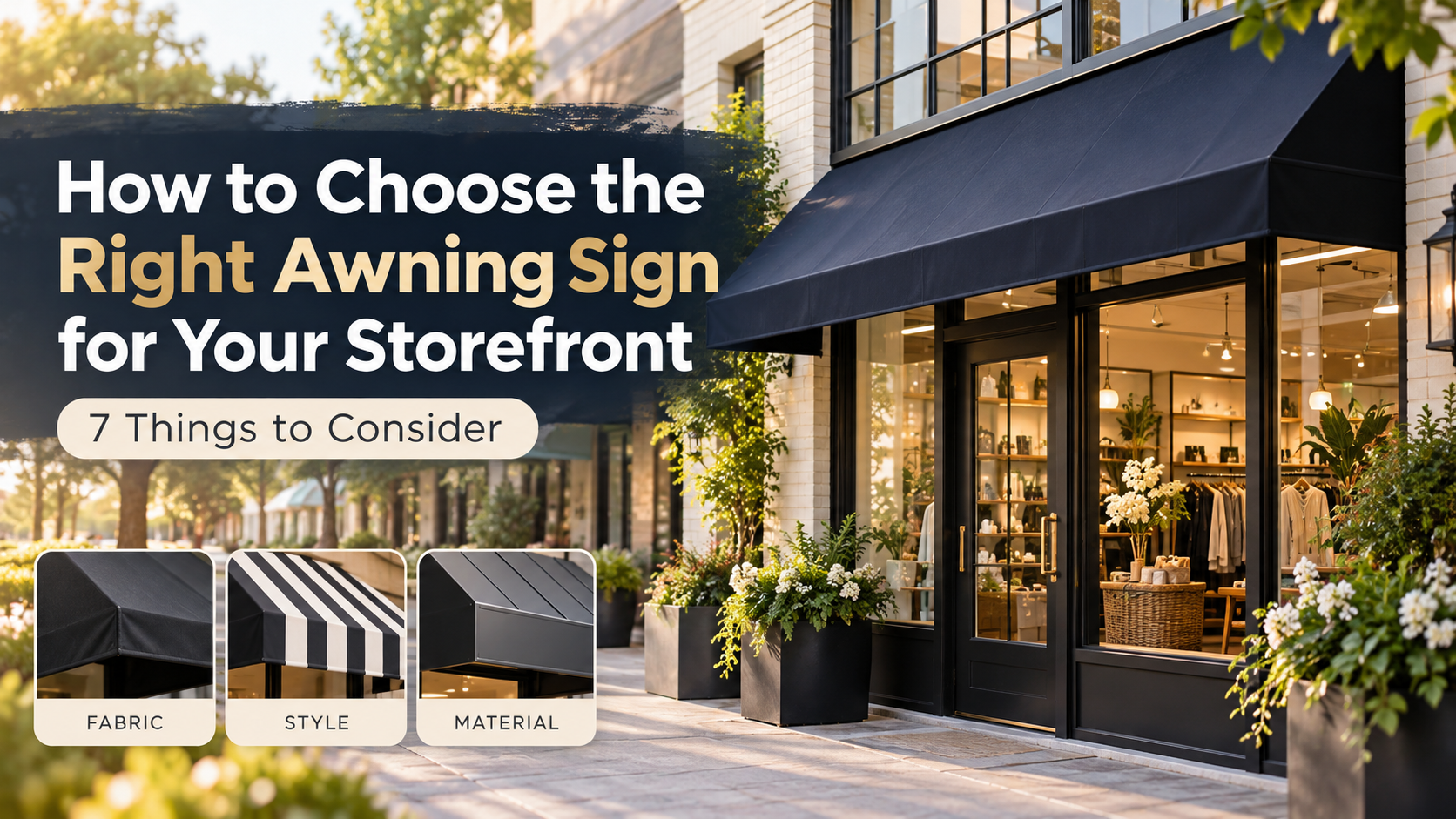
The right awning style depends on your storefront, available space, and brand identity. A design that works well for a café may not be the best choice for a professional office or retail shop.
Before choosing a style, consider the shape of your building, the position of your entrance, and how the awning will look alongside your existing signage.
Think about the overall impression you want to create. A traditional fabric awning may suit a neighbourhood bakery, while a clean, contemporary design could complement a modern retail space.
Your awning should look like a natural extension of your business rather than an unrelated addition to the building.
2. Select Materials for Your Local Weather Conditions
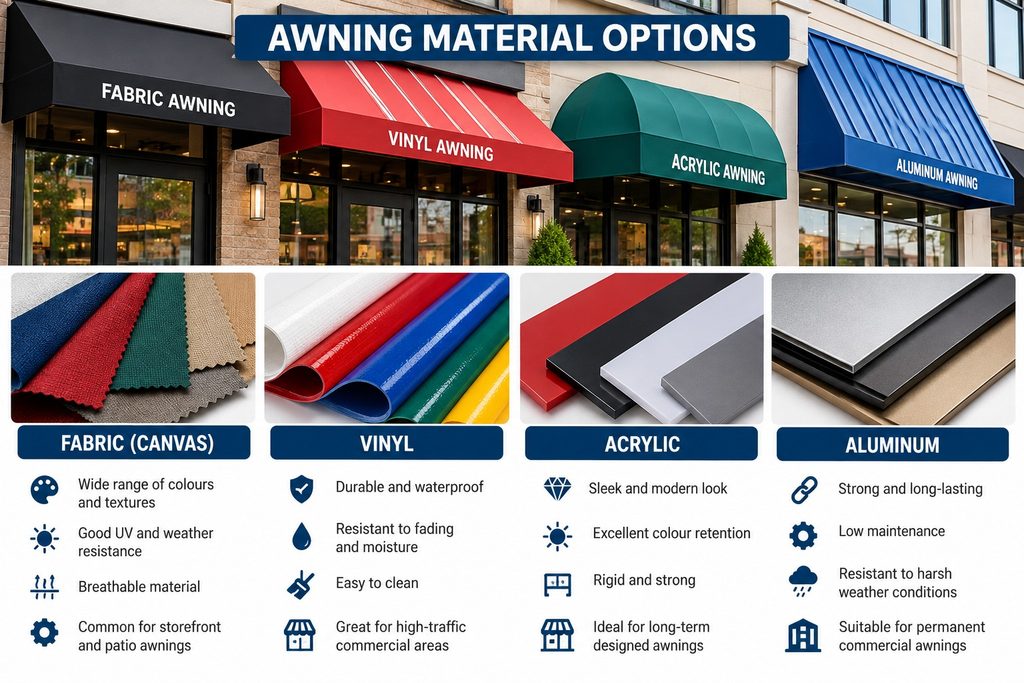
Outdoor awnings are exposed to sunlight, rain, wind, dirt, and seasonal temperature changes. Material selection can influence their appearance, durability, cleaning requirements, and overall maintenance needs.
Common options include coated fabrics, acrylic fabrics, and certain vinyl materials. The best choice depends on the design, installation conditions, expected exposure, and manufacturer’s specifications.
When comparing materials, ask:
- How well does the material handle prolonged sun exposure?
- Is it suitable for the expected rain and moisture?
- How easily can dirt and surface stains be cleaned?
- Does the material suit the intended lettering or printed graphics?
- What maintenance does the manufacturer recommend?
For businesses in Mississauga, it is particularly important to consider changing seasonal conditions. Choose materials and installation systems that are suitable for the property’s exposure and intended use.
3. Make Your Business Name Easy to Read
An awning can provide valuable space for your business name, but an overcrowded design may reduce its effectiveness.
Your business name or logo should be the main visual element. Additional information should support that message instead of competing with it.
For better readability:
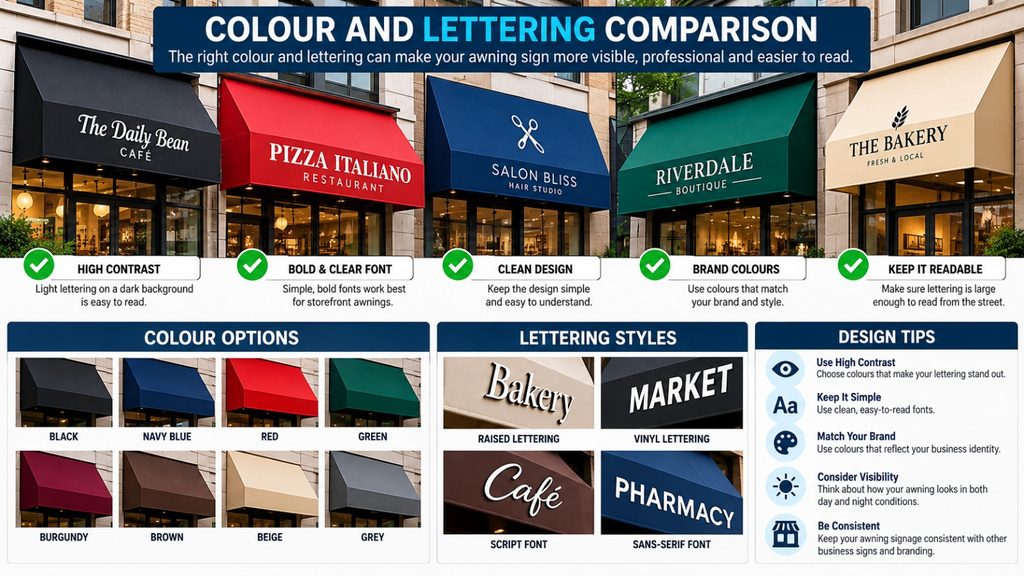
- Use clear, legible lettering.
- Select colours with strong contrast.
- Avoid excessive decorative elements.
- Keep important text away from seams and awkward folds.
- Consider viewing distance and the angle from which customers approach.
For example, a café might display its name prominently across the front valance, while a salon could use its business name and a simple logo.
A well-organized design helps your storefront communicate its identity without overwhelming the viewer.
4. Coordinate Awning Colours with Your Brand
The colour of your awning affects how your entire storefront looks. It should complement your logo, building materials, windows, doors, and surrounding architecture.
Start with your existing brand colours, then consider how they will appear on a larger outdoor surface.
Dark green, navy, burgundy, neutral tones, and other colours may work well depending on the business and building. However, the best combination depends on the specific design rather than any single universally effective colour.
Before approving production, request a design proof or material sample where available. Review it against the actual building and in different lighting conditions.
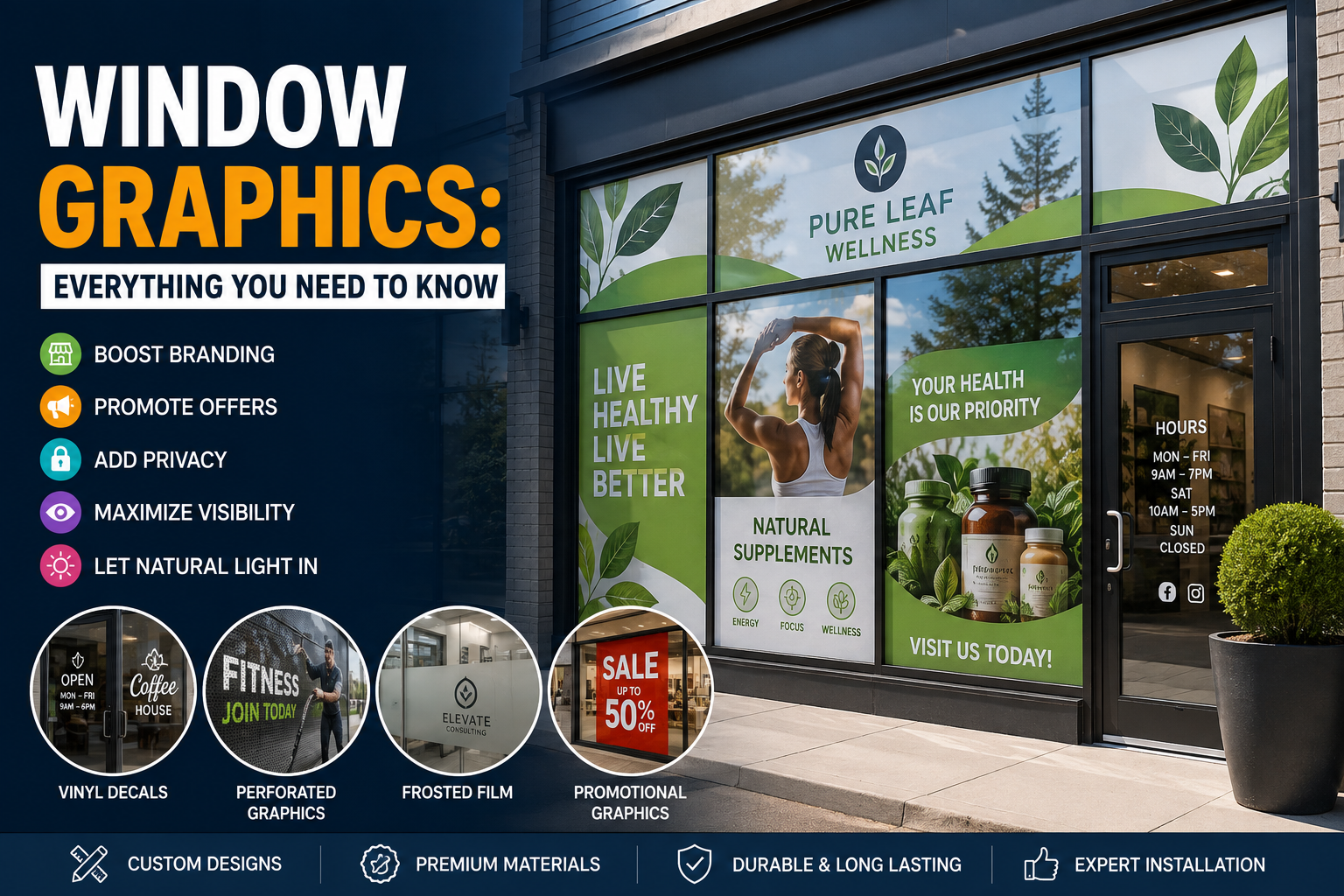
Consistent colours across your awning, main sign, and window graphics can create a more coordinated storefront.
5. Consider the Size and Position of the Awning
An awning that is too small may look disconnected from the entrance, while an oversized installation can overwhelm the storefront or interfere with windows and neighbouring spaces.
Measure the available area carefully before finalizing the design. Consider the width of the entrance, nearby windows, building features, pedestrian clearance, and any obstructions.
You should also assess how the awning will be seen from the sidewalk and approaching street traffic.
Ask your sign professional to review:
- The width and projection of the awning.
- The available space for lettering.
- Mounting requirements and structural suitability.
- Clearance for doors, windows, and pedestrians.
- Applicable property and municipal requirements.
Professional planning helps ensure that the awning fits the building and functions as intended.
6. Plan for Cleaning and Long-Term Maintenance
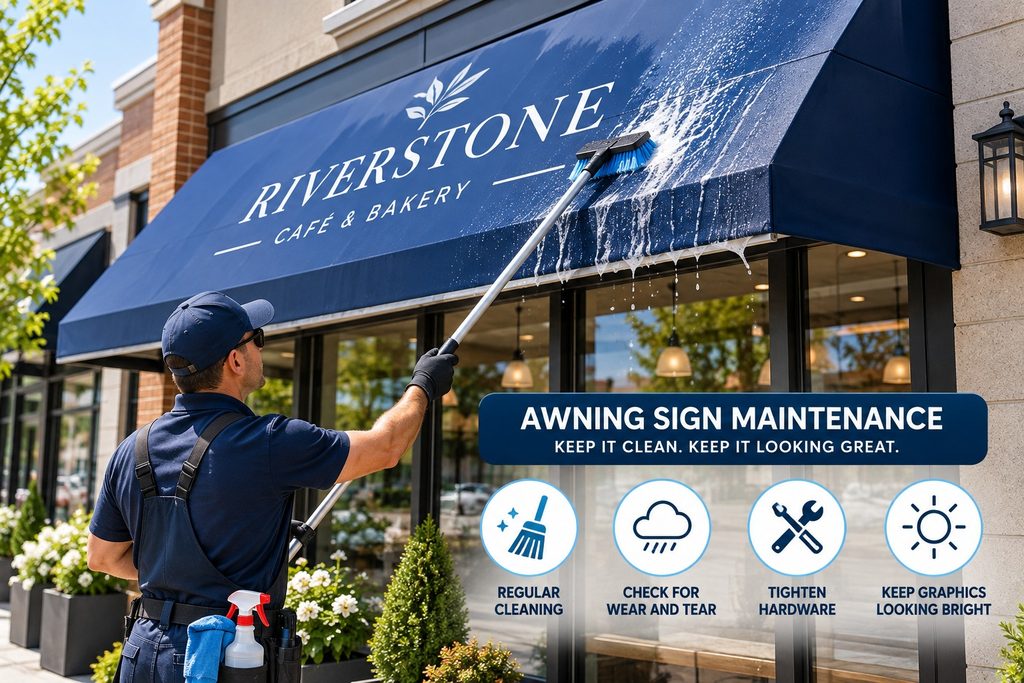
Even a well-designed awning can lose its appeal if dirt, stains, fading, or minor damage are ignored. Establishing a simple maintenance routine helps preserve its appearance and makes it easier to identify potential issues.
Inspect the awning periodically for loose fixings, worn fabric, damaged seams, fading graphics, and signs of moisture buildup.
Use cleaning products and methods recommended by the material manufacturer. Avoid harsh chemicals or aggressive scrubbing that could damage coatings, lettering, or printed graphics.
Following severe weather, check for visible damage when it is safe to do so. Structural concerns should be assessed by a qualified professional rather than handled as a routine cleaning task.
Regular inspections can help you address minor issues before they become more significant.
7. Understand Installation and Permit Requirements
Before ordering an awning sign, confirm that your proposed design can be installed at the intended location.
Requirements may vary depending on the building, property owner, installation method, awning projection, and municipal regulations. Some locations may also have restrictions involving heritage features, public walkways, or shared commercial façades.
If your business is in a leased commercial unit, check with the landlord or property manager before committing to a design.
Ask your sign provider about site measurements, mounting methods, installation arrangements, and any permits or approvals that may be required.
For additional guidance, explore professional sign installation services before beginning your project.
Awning Signs vs. Separate Storefront Signs: Which Should You Choose?
The right solution depends on your property and branding needs.
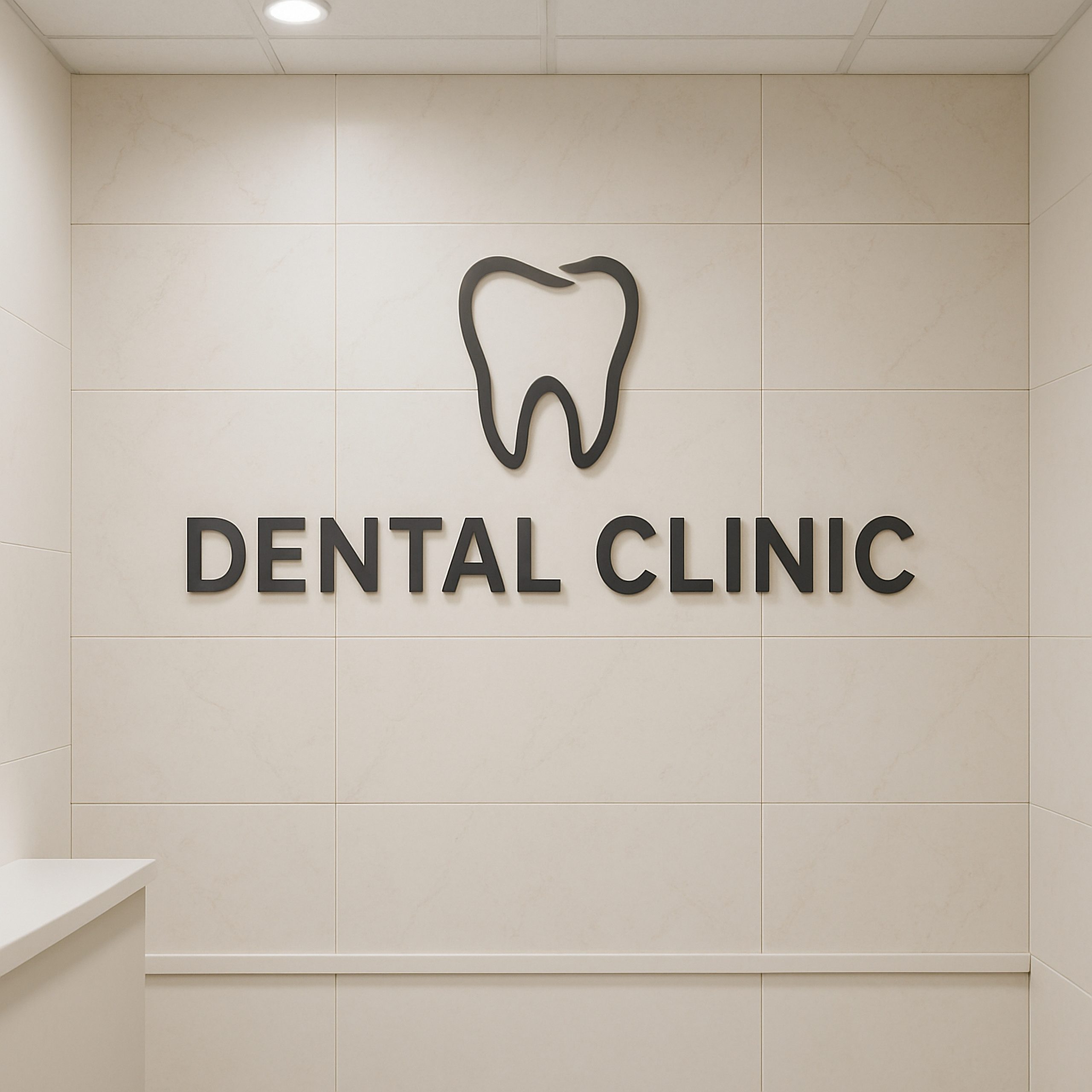
An awning sign combines a branded display with a canopy, making it useful for businesses that want their entrance and exterior branding to work together. A separate storefront sign may offer more flexibility when a building has limited awning space or when a different sign style better suits the architecture.
Some businesses may benefit from using both, provided the designs complement one another and comply with applicable requirements.
If you are considering different options, review the available storefront sign solutions to determine what may work best for your premises.
Give Your Storefront a More Distinctive Look with Signs Depot Mississauga
Choosing the right awning sign involves balancing design, durability, readability, and practical installation requirements.
A carefully planned awning can complement your architecture, communicate your brand identity, and create a more welcoming entrance for customers. By considering materials, colours, lettering, sizing, and maintenance before production, you can make a more informed decision for your business.
Signs Depot Mississauga offers a range of signage solutions for commercial properties. If you are planning a new awning sign or updating your storefront, discuss your requirements with a signage professional.
Ready to plan your awning sign? Contact Signs Depot Mississauga to discuss your project and request a quote.