
LED Signs or Traditional Signs
LED Signs vs Traditional Signs: Complete Comparison
Choosing the right sign for your business is about much more than putting your company name on a building. Your signage affects how easily customers notice your location, how they perceive your brand, and how effectively your storefront works as an advertising asset.
For Canadian businesses, there’s another consideration: weather. Outdoor signage may have to deal with snow, rain, wind, summer heat and significant temperature changes throughout the year.
One of the biggest decisions is whether to invest in an LED sign or traditional signage.
LED signage can provide strong nighttime visibility and a modern appearance, while traditional non-illuminated signs can offer simplicity, lower complexity and a classic aesthetic. Neither is automatically better the right choice depends on your business, location, operating hours and branding.
Here’s a practical LED signs vs traditional signs comparison to help you decide.
What Are LED Business Signs?
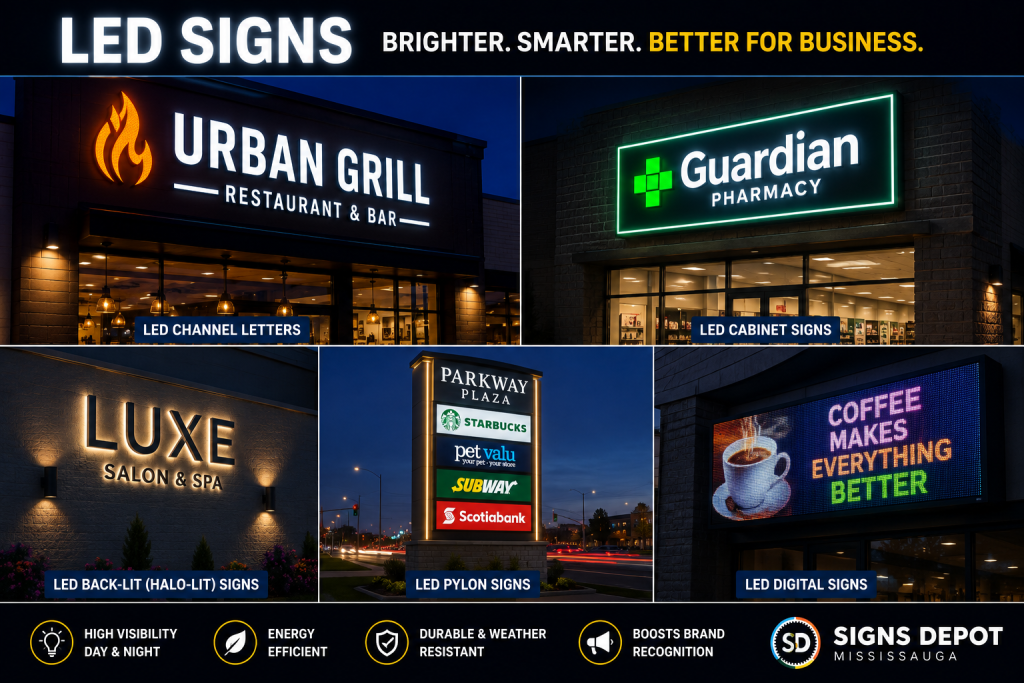
An LED sign uses light-emitting diodes as its illumination source. However, an “LED sign” doesn’t necessarily mean a large digital screen.
LED technology can be incorporated into several commercial sign styles, including channel letters signs, illuminated cabinet signs, backlit signs and other exterior signage.
For example, Signs Depot’s channel letters use internal LED lighting to provide visibility during the day and at night.
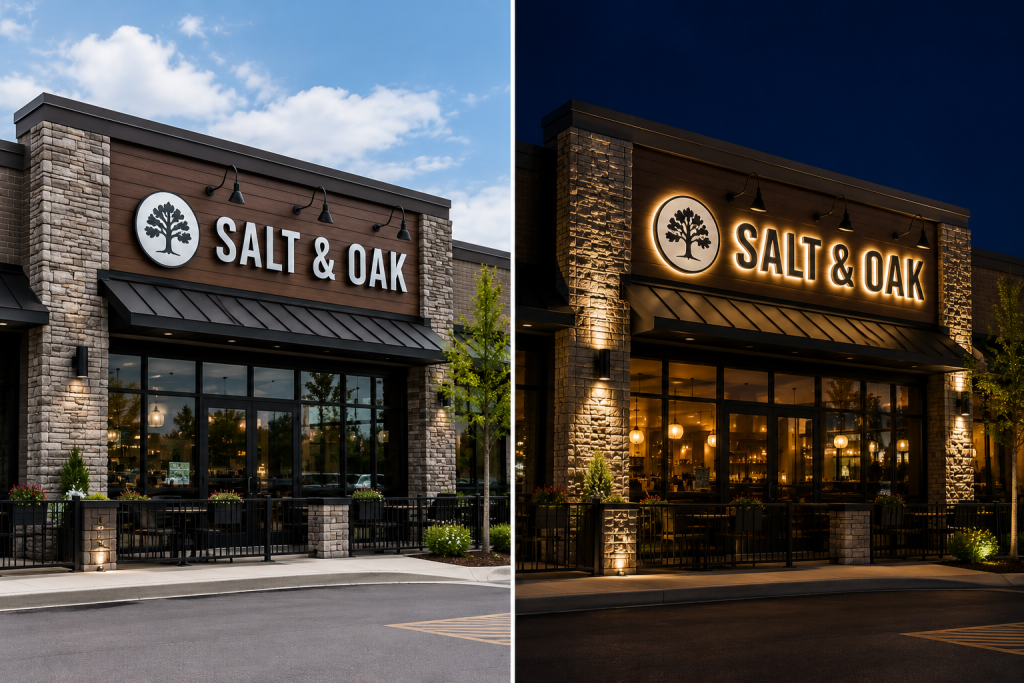
An illuminated restaurant name mounted above a storefront is a common example. During daylight, the physical letters establish the brand. Once the sun goes down, internal LEDs keep the business visible.
What Are Traditional Signs?
For this comparison, “traditional signs” means static signage that does not rely on internal LED illumination.
Examples can include:
- Non-illuminated dimensional letters
- Metal building signs
- Printed storefront graphics
- Hanging signs
- Panels
- Non-illuminated monument signs
Traditional signage shouldn’t be considered outdated. A professionally designed dimensional-letter sign, for example, can create a sophisticated appearance without internal lighting.
Signs Depot offers exterior signage in materials such as metal, plastic and wood, with options ranging from storefront and building signs to dimensional signage.
1. Visibility: LED Signs Have the Nighttime Advantage
Visibility is one of the strongest reasons businesses choose illuminated signage.
Consider a restaurant located along a busy commercial road in Mississauga. At 2 p.m., both an illuminated and non-illuminated sign may be easy to see. At 8 p.m. in winter, however, the situation changes considerably.
An LED channel letter sign continues displaying the restaurant’s identity after dark.
That’s especially valuable for businesses such as:
- Restaurants
- Bars
- Convenience stores
- Gyms
- Pharmacies
- Retail stores
- Entertainment businesses
Signs Depot describes illuminated channel letters as providing visibility during both day and night.
2. Cost: Look Beyond the Purchase Price
Traditional signage can often have a lower upfront cost because it doesn’t require LED modules, power supplies and associated electrical components.
But purchase price shouldn’t be your only consideration.
Think about the total cost of ownership, including installation, electricity, maintenance, repairs and how long you expect to use the sign.
LED illumination can be attractive for businesses that need strong nighttime visibility while controlling energy consumption. More broadly, Natural Resources Canada emphasizes that improving energy efficiency can lower operating costs for commercial facilities.
A business that closes at 5 p.m. may not receive the same value from illuminated signage as a restaurant operating until midnight.
That’s why signage should be chosen around how your business actually operates.
3. Maintenance: Traditional Signs Are Simpler
A non-illuminated metal or dimensional sign contains fewer electrical components.
That can make maintenance relatively straightforward: periodic cleaning, checking mounting hardware and repairing finishes when required.
LED signs introduce additional components, such as modules, wiring and power supplies.
Quality fabrication and professional installation therefore matter.
Don’t choose an illuminated sign based solely on the lowest quote. Ask what materials, LED components and fabrication methods will be used.
4. Branding: It Depends on the Impression You Want
Imagine two businesses.
Business A: An upscale accounting firm
Its office operates mainly during normal business hours. Brushed metal dimensional letters against an architectural wall could communicate professionalism without requiring illumination.
Business B: A new restaurant
Most customers arrive during the evening. Illuminated channel letters can make the restaurant easier to spot while creating a more noticeable nighttime storefront.
The accounting firm doesn’t necessarily need LED illumination.
The restaurant may benefit substantially from it.
That’s why there isn’t a universal winner in the LED signs vs traditional signs debate.
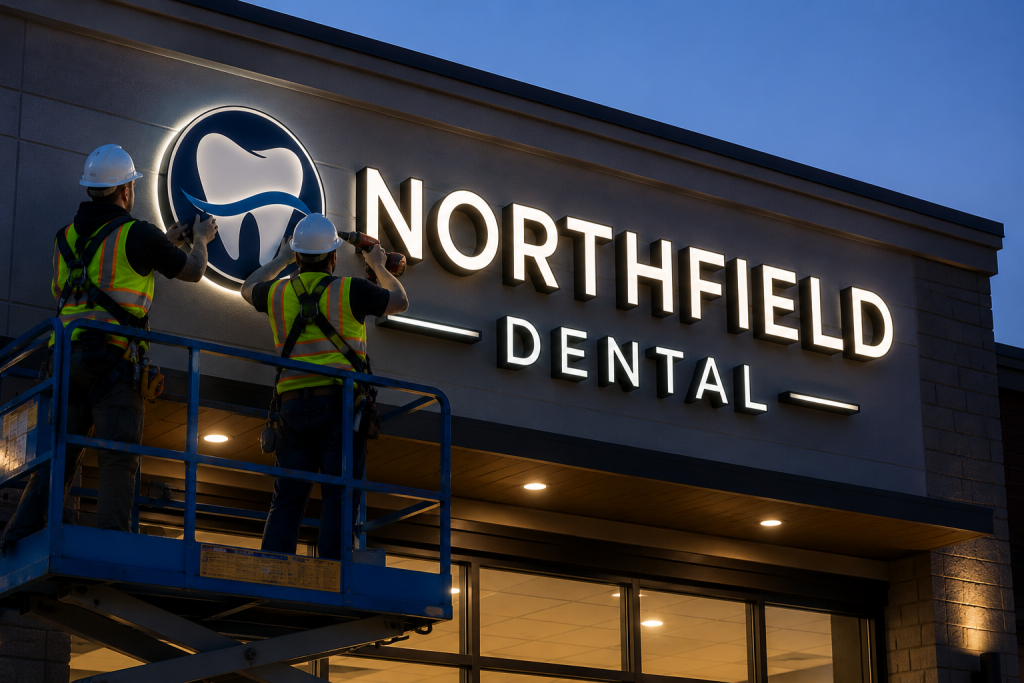
Signs Depot notes that building signage supports visibility, branding, navigation and professional presentation.
5. Canadian Weather and Durability
Outdoor signage in Canada needs to be designed for the environment in which it will operate.
Businesses in Ontario can experience rain, snow, freezing temperatures, summer heat and repeated freeze-thaw cycles.
That makes material selection, fabrication, electrical protection and mounting especially important.
Signs Depot’s exterior sign solutions use durable materials and are intended for outdoor commercial applications.
Whether you choose LED or traditional signage, ask your sign company about weather resistance, mounting, drainage, electrical protection where applicable, and ongoing maintenance.
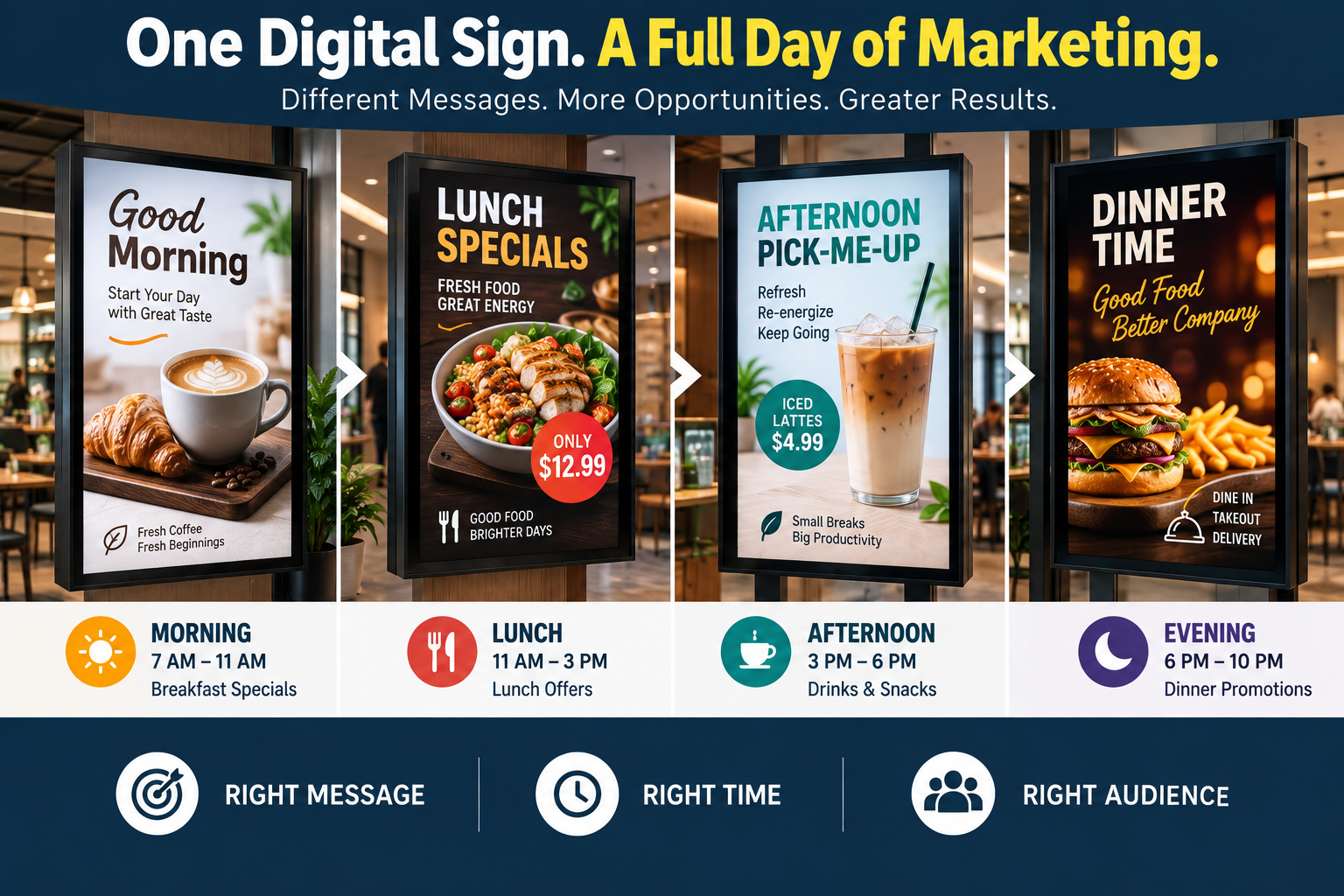
6. Flexibility: Digital LED Signs Offer an Additional Advantage
There’s an important distinction between LED-illuminated signs and digital LED message signs.
Illuminated channel letters generally display a fixed business name or logo.
A digital LED display, on the other hand, can change its content.
For example, a business could potentially display:
Monday: “Lunch Special”
Wednesday: “New Product Available”
Friday: “Weekend Promotion”
Traditional static signage would require another medium to communicate frequently changing promotions.
For organizations that regularly need to communicate changing information, digital signage can therefore offer an important advantage.
7. Don’t Forget Sign Permits
Before purchasing an exterior illuminated sign, businesses should check municipal requirements.
For businesses in Mississauga, this is particularly important.
The City of Mississauga states that permanent signs including ground signs and signs attached to buildings require a sign permit to confirm compliance with the Sign By-law and Ontario Building Code. Applications can require details including sign dimensions, graphics, whether the sign is illuminated, structural information and authorization from the property owner.
So don’t fabricate a large exterior sign first and investigate permits afterward.
Which Sign Should Your Business Choose?
Choose LED signage if your business operates after dark, depends heavily on storefront visibility, faces significant evening traffic, or wants a prominent illuminated appearance.
Consider traditional signage if your business primarily operates during daylight, doesn’t need illumination, wants a simpler architectural aesthetic, or needs to minimize electrical complexity.
And sometimes the best solution is both.
For example, a shopping plaza could combine an illuminated primary building sign with non-illuminated directional and parking signage.
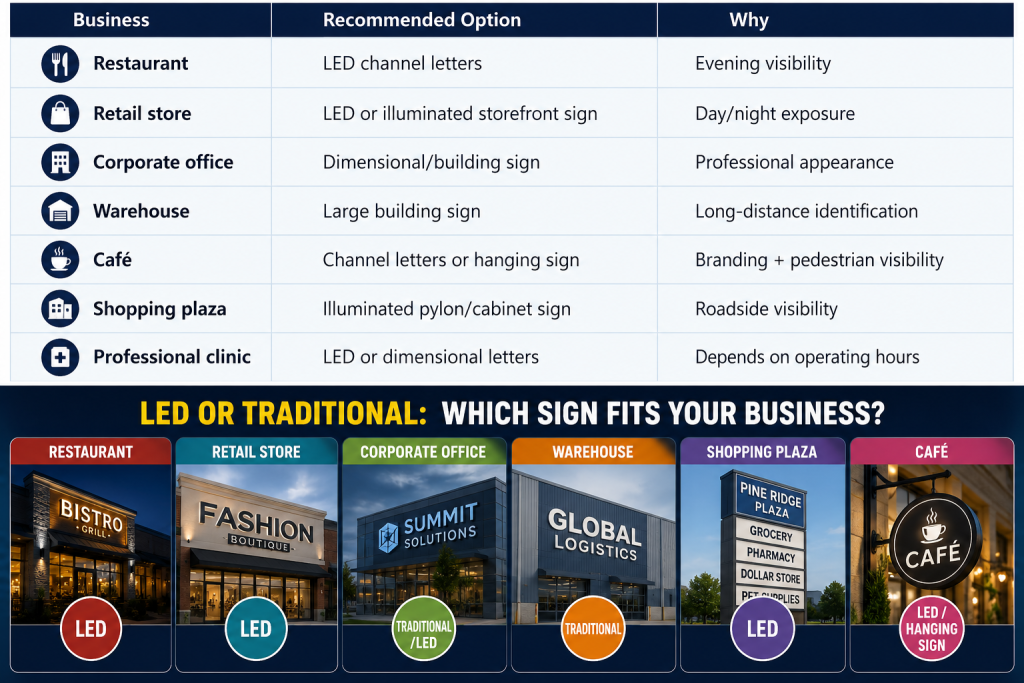
LED vs Traditional Signs for Different Businesses
Why Work With Signs Depot Mississauga?
The right signage decision shouldn’t begin with “LED or traditional?”
It should begin with your business location, visibility requirements, branding, operating hours and building conditions.
Signs Depot Mississauga provides custom exterior, storefront, building and channel letter signage for businesses in Mississauga. Its channel letter options include front-lit and back-lit configurations, while its broader exterior signage offering covers multiple sign styles and materials.
Frequently Asked Questions
1. Are LED signs better than traditional signs?
Not in every situation. LED signs are particularly useful when nighttime visibility matters. Traditional signage can be a better fit when illumination isn’t necessary or when a simpler architectural appearance is preferred.
2. Are LED business signs suitable for Canadian winters?
They can be, provided the complete sign including its enclosure, electrical system, materials and mounting is designed and installed appropriately for outdoor conditions.
3. What businesses benefit most from LED signs?
Restaurants, retail stores, gyms, convenience stores and other businesses that operate into the evening can particularly benefit from illuminated signage.
4. Do LED signs require permits in Mississauga?
Permanent exterior signage in Mississauga can require a sign permit. The City’s application requirements specifically consider whether proposed signage is illuminated.